




Mawi Technical Snapshot
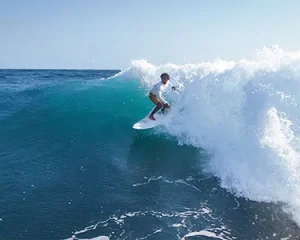
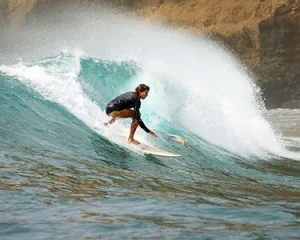
Mawi is a “swell magnet” that transforms as the size increases. On small days, it is a fun, rippable peak; on big days, it becomes a heavy, barreling machine.
| Wave Type | Left-Hand Reef Break (A-Frame) |
| Best Swell Direction | South – Southwest |
| Best Wind Direction | East – Southeast (Offshore) |
| Ride Length | 50m to 120m |
| Bottom Type | Sharp Coral Reef |
| Consistency | 9/10 (One of the most reliable waves in Indonesia) |
The Break: Power, Barrels, and Heavy Drops
Mawi is located in a rugged bay west of Kuta. It is a true A-frame, but the left is the undisputed star of the show.
The Left: The Main Attraction
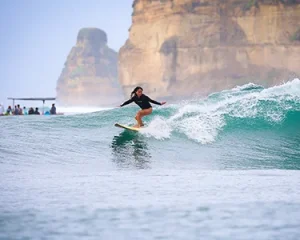
The left at Mawi is fast, powerful, and often hollow. On a medium swell, it offers a steep take-off followed by a long, rippable wall. When the swell hits 6 to 8 feet, Mawi turns into a “mini-Pipeline,” offering heavy barrel sections that require expert timing and commitment.
The Right: Short and Punchy
The right-hander is much shorter and usually closes out into the channel. However, on smaller days or specific swell angles, it can provide a quick, punchy ride for shortboarders looking to practice aerials or quick snaps.
Lombok Surf Seasons: When to Surf Mawi
Mawi is the ultimate Dry Season spot (May to September). During these months, the Southeast trade winds blow perfectly offshore, grooming the left into a clean, glassy face.
In the Wet Season, the wind often turns onshore, making the conditions messy. However, Mawi is so consistent that it still picks up swell even when other spots are flat. If you find a rare morning with light winds in the “off-season,” you might score Mawi with significantly fewer people.
LMBK Local Secret: The “Inside Rock” and the Current
Mawi is beautiful but unforgiving. The reef is sharp, and there is a notorious rock on the inside that becomes a major hazard as the tide drops.
Pro Tip: Pay close attention to the “End Section.” Many surfers make the mistake of riding the wave too far into the shallow inside reef. It is much better to kick out early into the channel than to risk your fins (or your skin) on the sharp coral. Also, when it is big, the “paddle back” can be a workout due to a strong sweep toward the cliffs.
Directions: How to Get to Mawi from Kuta Lombok
The journey to Mawi is part of the experience, taking you through some of Lombok’s most dramatic coastal scenery.
Parking: There is a small fee for parking at the beach, and a few local warungs are available for a post-surf Bintang or Nasi Goreng.
By Scooter: Approximately a 30 to 40-minute drive west of Kuta. The road is paved for the most part, but the final dirt track leading down to the beach can be very bumpy and slippery after rain.
Mawi FAQ
Generally, no. Mawi is known for being a “punchy” and heavy wave. Even on smaller days, the currents and power of the wave make it better suited for intermediate and advanced surfers.
Mawi picks up more swell than almost anywhere else in South Lombok. If Gerupuk or Ekas are flat, head to Mawi—it almost always has a wave to surf.
The tide drastically changes the wave’s personality. At low tide, it is a tight, hollow A-frame. As the tide fills in to high tide, the wave opens up into distinct, longer Left and Right walls.
Yes, the final 3.4 km is an unpaved dirt track. After rain, it gets muddy and slippery. You need scooter experience to navigate it safely, or you should hire a car/driver.
It used to have a bad reputation, but it is much safer now. There are local warungs and parking attendants. If you park in the designated area and buy a coconut or water from the locals, your stuff will be safe.


